
First Bay Opened
A focused drivetrain and exhaust repair bay with one alignment lift and a manual torque station — enough capacity to prove the documentation model worked at scale.
Our Story
qvantobiome began as a single-bay operation with one rule: never reassemble what you cannot explain.
From a modest facility on Brazos Street in Austin, we grew into a specialist workshop trusted by fleet operators and daily drivers who demand traceable work. Every expansion — new lift, new diagnostic bench, new documentation station — was driven by the same principle that shaped our first job: controlled removal, labeled hardware, and assembly verified before keys change hands.
The founding team did not set out to build a brand. They set out to solve a recurring problem: vehicles returned from other shops with mystery rattles, leftover fasteners, and hoses routed incorrectly after major component work. The first internal protocol — color-coded bags for every removed bolt, numbered in removal order — was scribbled on a whiteboard and never replaced.
Word spread through local fleet managers who noticed fewer comeback visits. Independent owners followed, often arriving with photos of previous repairs and asking whether we could verify what had been disturbed. That demand shaped our intake process: we photograph the engine bay before touching a single connector, then build a teardown log that travels with the vehicle through every stage of the job.
Today that whiteboard protocol lives in digital service orders, but the spirit is unchanged. We treat disassembly as a contract with the owner — a written promise that what we remove, we will restore with equal or greater precision.
A focused drivetrain and exhaust repair bay with one alignment lift and a manual torque station — enough capacity to prove the documentation model worked at scale.
Cooling fan modules and headlight switching systems entered the service catalog as wiring complexity outpaced what general shops could trace without destroying harness integrity during removal.
Every full teardown now ends with a timestamped image set linked to the service order — belt routing, connector placement, and a final zero-surplus-bolt confirmation shot.
These are not marketing slogans posted on a wall. They are operational rules reviewed in weekly shop meetings and referenced when a repair path is ambiguous.
A faster job that skips labeling saves minutes and costs hours when a connector lands on the wrong pin. We budget time for documentation because comebacks erase profit and trust simultaneously. Technicians are evaluated on first-pass verification rates, not bay turnover alone.
When a teardown reveals damage beyond the initial complaint, we stop and contact the owner before proceeding. Hidden wear is common in high-mileage assemblies — pretending otherwise would mean reassembly on a compromised foundation. Clarity at the midpoint of a job protects everyone involved.
Exhaust joints, steering column fasteners, and transfer case hardware each carry sequence-specific torque values. We maintain calibrated wrenches logged by serial number and replace consumables on a schedule — not when they fail mid-job. Guesswork has no place in a reassembly bay.
Module behavior changes across model years. Our team subscribes to updated service literature and shares findings in internal briefings — especially for variable displacement oil pumps and fan control units where software revisions alter diagnostic paths without obvious physical differences.
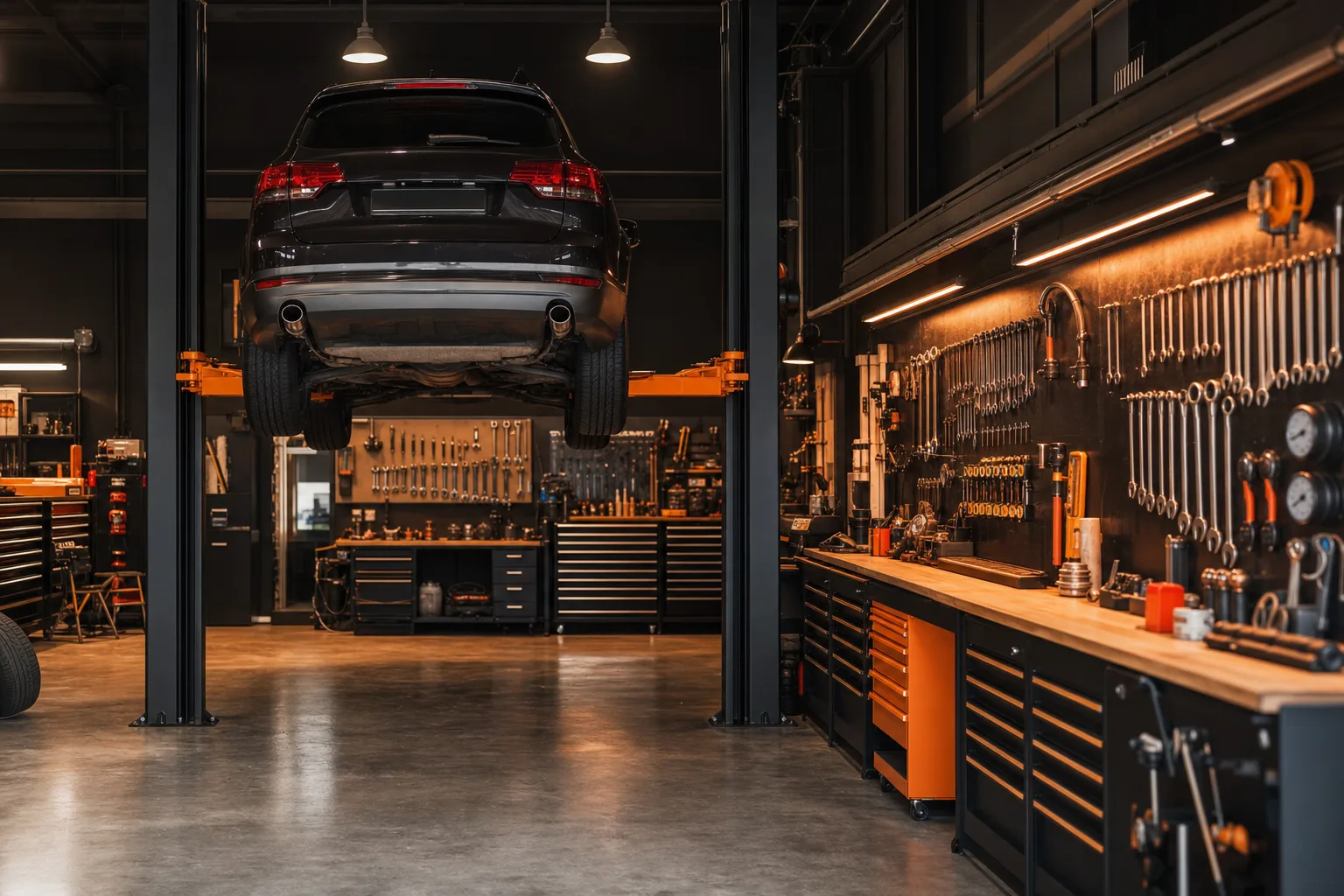
Layout matters when you disassemble complex assemblies weekly. Our bays are organized into zones: intake photography near the entrance, teardown tables with overhead lighting for connector inspection, a clean room for module bench testing, and a final audit lane where torque marks are checked against the service log before the vehicle moves to the delivery area.
Fastener storage uses a wall-mounted grid sorted by thread pitch and head type — not by job — so technicians never hunt through mixed bags at reassembly time. Hose and line routing photos are taken at three angles minimum: wide context, mid-range connector detail, and close-up pin orientation.
Environmental control keeps electrical modules within stable temperature ranges during bench diagnosis. For drivetrain work, fluid capture systems and sealed drain pans prevent cross-contamination between jobs — a small detail that protects seal surfaces and diagnostic accuracy on the next vehicle through the bay.
qvantobiome maintains working relationships with parts distributors, technical training providers, and regional fleet maintenance networks. These partnerships are fictional in name but reflect real categories of support that keep our procedures current and our supply chain reliable.
Parts Supply
Priority access to transfer case seal kits, axle hardware, and OEM-equivalent gaskets with same-day availability for fleet accounts — reducing vehicle downtime when a teardown reveals unexpected wear.
Training
Quarterly advanced seminars on module diagnostics, variable displacement pump calibration, and exhaust joint torque sequencing — attended by senior technicians before new service lines launch publicly.
Fleet Network
Coordinated maintenance scheduling for light commercial fleets requiring documented reassembly and photo confirmation — aligning our intake workflow with their compliance reporting requirements.
Fluid levels, stored fault codes, belt tension, and accessory noise profiles are recorded before removal begins. Skipping baseline data makes it impossible to prove a post-repair improvement or identify a pre-existing condition unrelated to our work.
Any discovery that changes scope, cost, or timeline triggers a direct conversation — not a note left on an invoice. Owners approve continued work with full visibility into what was found and why it matters for long-term reliability.
A second technician reviews the teardown log against the installed components before the final torque pass. This peer check catches reversed connectors, missed clips, and routing errors that a single pair of eyes might overlook after hours at the bench.
Functional tests under load — cooling fan ramp cycles, headlight switching sequences, accessory drive noise checks — confirm the repair under conditions closer to real driving than idle-only observation.
Have questions about our workflow, want to schedule an evaluation, or need a second opinion on a previous repair? Our workshop team responds around the clock and can walk you through what a documented teardown would look like for your vehicle.
Get in TouchOur technicians publish in-depth guides on subsystem repair, diagnostic approaches, and assembly best practices. Each article reflects real workshop experience — written to help owners understand what happens during a professional teardown, not to replace hands-on evaluation.
The content published on qvantobiome.info is intended to help vehicle owners understand repair methodologies, maintenance practices, and the technical scope of workshop services. Articles, guides, and service descriptions provide general knowledge about automotive systems and should not be treated as a substitute for a hands-on inspection by a qualified technician.
qvantobiome provides consultation and repair services in the field of automotive maintenance and reassembly. Every vehicle presents unique wear patterns, prior repair history, and environmental factors that influence the appropriate course of action. We recommend scheduling a professional evaluation before attempting complex repairs based solely on website materials.
Outcomes described in case studies, testimonials, and performance metrics reflect past workshop experience and do not guarantee identical results for every vehicle or situation. Repair timelines, part availability, and final costs depend on diagnostic findings that can only be confirmed after physical assessment.
By using this website, you acknowledge that qvantobiome is not liable for decisions made independently without direct consultation with our team or another certified automotive professional. For service inquiries, diagnostic appointments, or detailed repair estimates, please reach out through our contact page or call our workshop directly.