Exhaust leaks at manifold flanges, catalytic converter joints, and flex-pipe connections are among the most common comebacks in general repair — and most are preventable. The gasket and hardware may be correct, but skipping the published torque sequence or applying final spec in a single pass warps the flange and opens a leak path within the first heat cycle.
Why Exhaust Joints Are Sensitive to Installation Error
Cast iron manifolds, stamped flanges, and tubular sections expand at different rates when hot. A joint tightened fully on one side before the opposite side is seated creates a twist that the gasket cannot compensate for. The result is a tick or puff on cold start that owners often dismiss until a failed inspection or cabin odor forces attention.
- Ticking noise on cold start that fades as metal expands
- Black soot marking at flange faces or stud threads
- Failed emissions test due to upstream oxygen sensor skew
- Broken studs from previous over-torque attempts
The Role of Torque Sequence
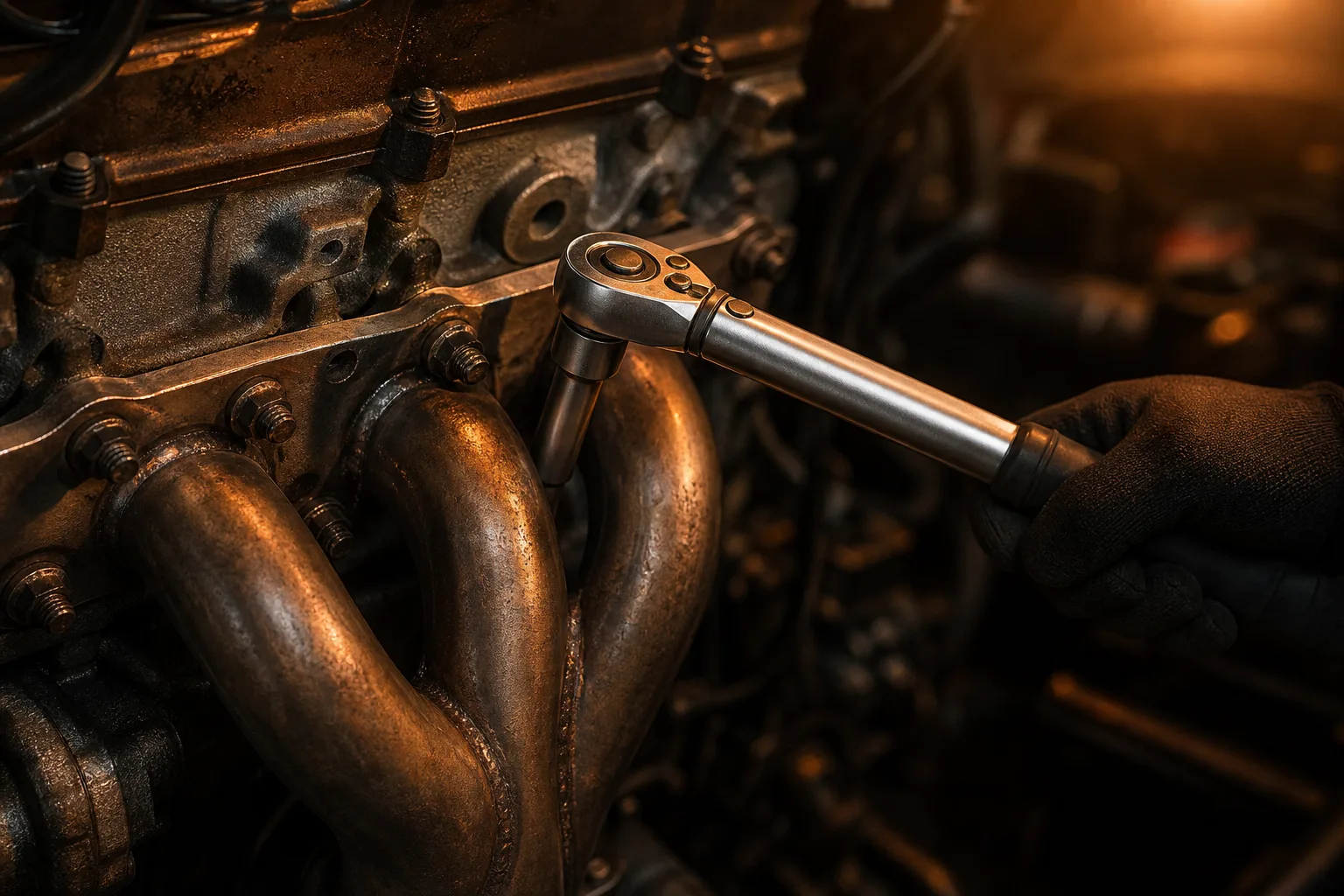
Manufacturer sequences typically start from the center of the manifold and work outward, or cross-pattern on four-bolt flanges. Each pass increases torque incrementally — often three stages from hand-tight to intermediate to final specification. We mark the sequence on the flange with paint pen during disassembly so reassembly follows the same path without referencing a screen in a tight engine bay.
Multi-Pass vs. Single-Pass Tightening
Applying full torque to one bolt before neighbors are partially seated concentrates stress and can crack cast iron ears. Multi-pass tightening distributes clamp load evenly across the gasket surface. On turbo outlet flanges, uneven load also distorts the turbine housing interface and creates boost leaks unrelated to the exhaust gasket itself.
Gasket Selection and Surface Prep
Composite, multi-layer steel, and ring-type gaskets each demand specific surface conditions. Old gasket material must be removed without scoring the flange; warped surfaces beyond specification require machining or replacement rather than thicker gasket compensation. Anti-seize on studs is used only where the manufacturer permits — excess compound changes effective torque and leads to loose joints after heat cycles.
Post-Repair Verification
We run the engine to operating temperature, shut down, and re-check torque where the procedure allows retorque after first heat cycle. A smoke test at the joint confirms seal integrity before underbody shields are reinstalled. Documenting the sequence and final values completes the repair record and gives the next technician a reliable baseline if the vehicle returns years later.